The Doorbell Bottles: One White, One Red, and the Fine Art of Being Nearly Ready
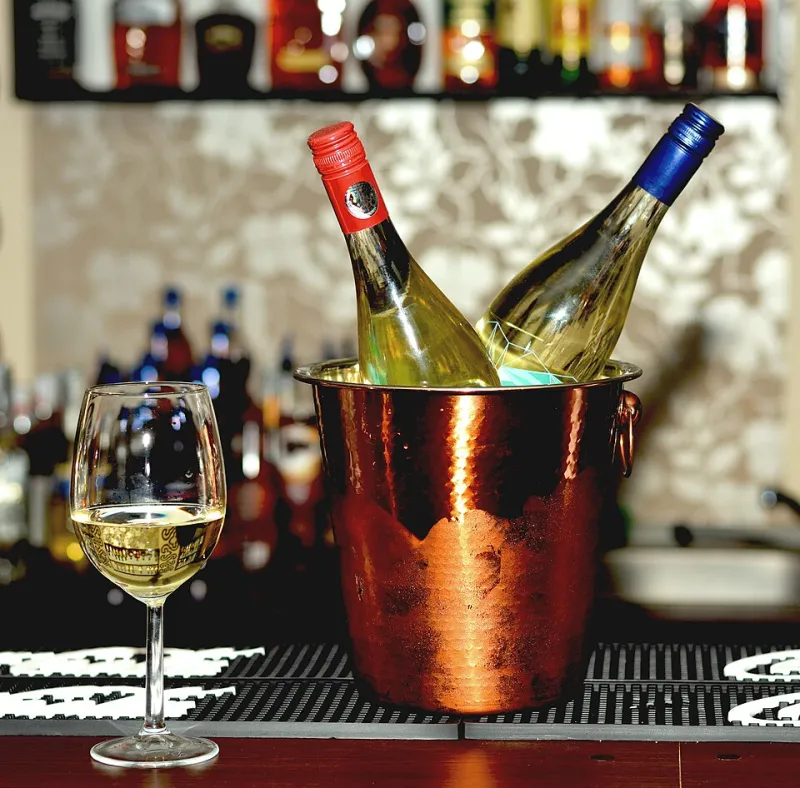
Photo: Robertgombos, CC BY-SA 4.0, via Wikimedia Commons
There is a particular sort of December knock. It arrives at 7:40 on a wet Thursday, just after you’ve taken off your boots. Someone is holding a ladder, or a bag of clementines, or a dog lead and an apology. They have not come for dinner. They have come because they were passing, and because the lane is dark and your window looked warm.
This is not the moment for a tasting menu. It is the moment for two bottles you keep ready, a wedge of something salty and the calm assurance that nobody needs to be impressed. In the festive run-up to 2026, with diaries already doing their annual impression of a packed village hall, the most useful sort of hospitality is the nearly-ready kind.
Two bottles is not a wine list. It is a small kindness.
The temptation, when you start thinking about impromptu visitors, is to build a cellar. You imagine rows of labels, a corkscrew on a ribbon, a little notebook. You do not need any of that. You need one white and one red that can handle being opened on a whim, served in ordinary glasses, and enjoyed alongside whatever happens to be in the cupboard.
Keep them somewhere sensible: the white in the fridge door, the red in a cool cupboard away from the radiator. Neither should be so precious that you hesitate. If a bottle is too good to open for a neighbour with wet hair and a ladder, it is probably too good to be useful. The doorbell bottle is a working bottle. Its job is to make a Thursday feel less like a Thursday.
The white: crisp, quiet and always welcome
A dry white with good acidity is the reliable guest. Look for a Picpoul de Pinet, a Muscadet Sèvre-et-Maine, or a young dry Riesling if your shop has one. You want lemon peel and green apple rather than oak and honey. Something with a clean, slightly saline finish that makes salted snacks taste better and conversation come easier.
Serve it properly cold, but not punishingly so. Ten minutes out of the fridge while you find glasses and open a bag of crisps is about right. It will cope with ready-salted crisps, salted almonds, a dish of olives, or a few crackers with a soft, mild cheese. If someone arrives with a tub of hummus and a carrot, so much the better. This is not a pairing exam. It is a glass of something fresh while coats are hung up.
The red: juicy, cool and unbothered
For the red, think light and lively rather than dark and dusty. A Beaujolais-Villages, a young Côtes-du-Rhône, or a juicy unoaked red from southern France will do the job. You are looking for raspberry and black pepper, a bit of earth, tannins that don’t grip. The kind of red that tastes good slightly cool, straight from a cupboard in a house that is not overly heated.
Give it twenty minutes in the fridge if the room is warm. Open it, pour it, put it on the table. No decanting, no performance. A tea towel folded under the bottle is a perfectly good coaster. This is the red that goes with a chunk of mature cheddar, a spoonful of Branston, a cold sausage roll, or the last of Sunday’s roast chicken pulled from the fridge. It is also the red that survives being forgotten for ten minutes while you answer the door again.
The cupboard shelf that earns its keep
The wine is only half the welcome. The other half is a small, unglamorous shelf of things that can become a plate in under three minutes. Crackers. Salted nuts. Olives. A jar of roasted peppers. A wedge of cheddar. A couple of apples. Maybe a bar of chocolate for later, because December is December.
None of this needs to be arranged. A board is nice; a plate is fine; the paper the crackers came in is not ideal but nobody has ever gone home early because of it. If the visit stretches, add soup from the freezer or toast something. The point is not to produce a feast. The point is to make it clear that the door was open, the fire was on, and there was enough to share.
Ask, pour, sit down
When there are two bottles, the question is simple: white or red? Ask it early, before anyone has settled into the sofa and become difficult to move. Pour small glasses. People can always have more. If they hesitate, give them a little of each. This is not indecision; it is research.
The second glass is the one that matters. The first is politeness, or thirst, or the relief of being out of the rain. The second is company. By then the ladder is in the hall, the dog is asleep, and someone is telling the story about the village hall Christmas do in a way that makes you forget what time it is. That is not a plan. That is an evening.
A small case for being nearly ready
A perfect plan makes a lovely dinner. A nearly-ready shelf makes a Thursday possible. In the festive run-up, when people drop by with cards and jars and half-finished conversations, the doorbell bottle is a quiet sort of generosity. It says: you don’t need an invitation, and I don’t need to tidy the kitchen.
So choose your white. Choose your red. Put them where you will actually find them. Buy the crackers you like, and a cheese that can be cut without ceremony. Then leave the rest to the knock at the door. In December 2026, that may be the most useful thing in the house.