A Better Jug: Why Mulled Wine Deserves a Proper Red
Walk into any village hall in December and you will find a slow cooker full of something dark and steaming. Sometimes it is lovely. More often it tastes of sugar, cloves and regret — the vinous equivalent of a fruit cake left out in the rain. The fault is rarely the recipe. It is the wine.
At The Village Wine Bar we have a simple rule for mulled wine: start with a bottle you would happily drink on its own. Not an expensive bottle. Not a trophy bottle. Just a decent, juicy red with enough fruit and structure to survive a gentle warming and a crowd of thirsty neighbours. The difference between a mulled wine that tastes of spice and fruit and one that tastes of hot Ribena is almost always the base.
The dusty-bottle trap
We have all done it. A half-drunk bottle of something thin and tannic gets pushed to the back of the rack in January, rediscovered in November, and promoted to mulled wine duty. The logic feels thrifty: the spices will cover it up. They will not. Warming wine exaggerates its flaws. A wine that was already tired and acidic will taste tired and acidic, only hotter and with a clove in it. Sugar can mask a lot, but it cannot turn a bad red into a good drink — it just makes a sweet bad drink.
The better approach is to buy specifically for the jug. Set a budget of £6 to £10 a bottle and look for something with generous fruit, moderate tannin and a bit of natural spice. You are not looking for complexity. You are looking for a red that can take a little heat without falling apart.
A base recipe that lets the wine speak
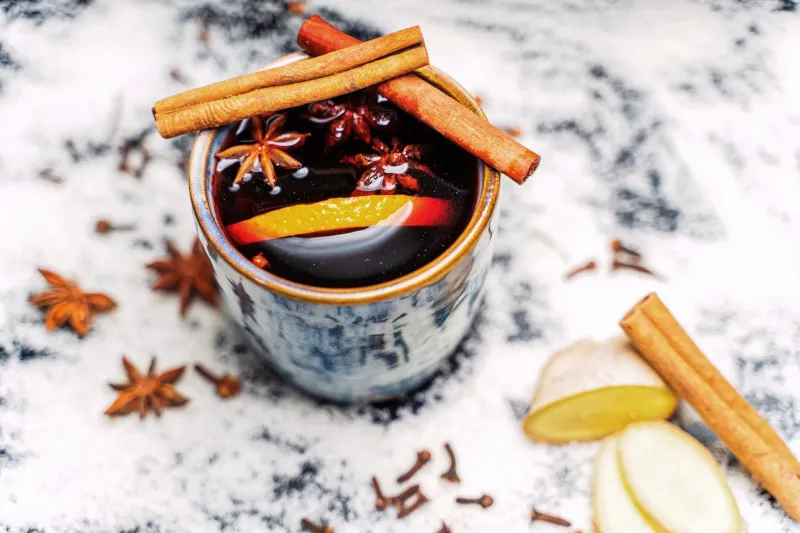
This is the version we use behind the bar. It is deliberately restrained. The wine is the main event; the spices are the backing band.
For one 750ml bottle:
- 750ml decent red
- 100–150ml water or fresh orange juice
- The peel of one orange, taken in wide strips
- 1 cinnamon stick
- 3 cloves
- 1 star anise
- 2 allspice berries
- 1–2 tablespoons sugar or honey, to taste
Warm everything gently in a pan to around 65–70°C — steaming, but not bubbling — for about 20 minutes. Do not let it boil. Boiling drives off the alcohol and the fresh fruit, leaving you with a sweet, flat, spicy syrup. Taste after 15 minutes, adjust the sugar, and serve.
For a crowd, the ratios matter more than the volume. If you are making a six-bottle batch for a village event, do not multiply the spices by six. Use roughly four times the spice, taste at the 20-minute mark, and add more only if it needs it. Spices keep giving the longer they sit; sugar does not stop giving. A jug that tastes perfect at 6pm can be cloying by 8pm if you were heavy-handed at the start.
Three affordable reds that can take the heat
You do not need to spend much, but you do need to choose well. These three styles are widely available in UK supermarkets and independent shops, and they all hold up to warming without losing their character.
Spanish Garnacha, around £7–9. Juicy, rounded and low in tannin, with loads of red plum and a natural peppery edge. It warms beautifully and does not turn bitter. Look for a young, unoaked bottle rather than anything aged in heavy oak.
Portuguese red blend, around £6–8. Blends based on Touriga Nacional and Tinta Roriz have dark fruit, a little structure and a savoury spice that sits happily alongside cinnamon and star anise. This is the workhorse of the three — reliable, food-friendly and excellent value.
Argentine Malbec, around £8–10. Soft, plummy and generous. Malbec can handle a gentle mull without losing its fruit, and it brings a roundness that makes the finished drink feel luxurious rather than thin. Avoid anything too oaky or too high in alcohol; you want supple, not syrupy.
What to avoid: delicate Pinot Noir, very tannic young Cabernet, and anything that already tastes of vanilla and sawdust. The spices will fight the oak, and the tannin will turn harsh.
Keeping it out of sugar-bomb territory
The biggest mistake in mulled wine is not the spice — it is the sweetness. Many recipes call for 100g of sugar or more per bottle, which is closer to a dessert wine than a winter warmer. Start with one tablespoon per bottle, taste, and add a little more only if the fruit needs it. A squeeze of fresh orange or a splash of water will lift the wine without adding sugar.
If you want a richer drink, add a tablespoon of honey rather than more white sugar. If you want a drier option for the table, hold back the sweetener entirely and let people add their own. At village events we often keep a small jug of the unsweetened base warm alongside the main batch. It disappears faster than you would expect.
Serving it at a village event without the faff
A slow cooker on the lowest setting is your friend. Warm the mulled wine gently, then switch to keep-warm and leave the lid slightly off so it does not reduce. Do not let it simmer for hours; after about 90 minutes the fruit starts to fade and the spices take over. Make it in batches and top up as needed rather than making one giant vat at noon.
Serve in mugs, not wine glasses. Add a fresh strip of orange peel to each one. Put a small sign on the table listing what is in it — people like to know, and it saves you answering the same question forty times. Always offer a non-alcoholic version: a strong hibiscus tea with the same spices and a little orange juice is genuinely good, not a consolation prize.
And keep the sugar low. A village hall full of people who have already had a mince pie does not need a drink that tastes like liquid pudding. The best mulled wine leaves you wanting a second glass, not a glass of water.
The test is simple. Would you pour yourself another? If yes, the jug is doing its job. If not, the problem is probably still the bottle at the back of the cupboard.