Cheddar, Chutney and a Grown-Up Pour: In Defence of the Bar Toastie
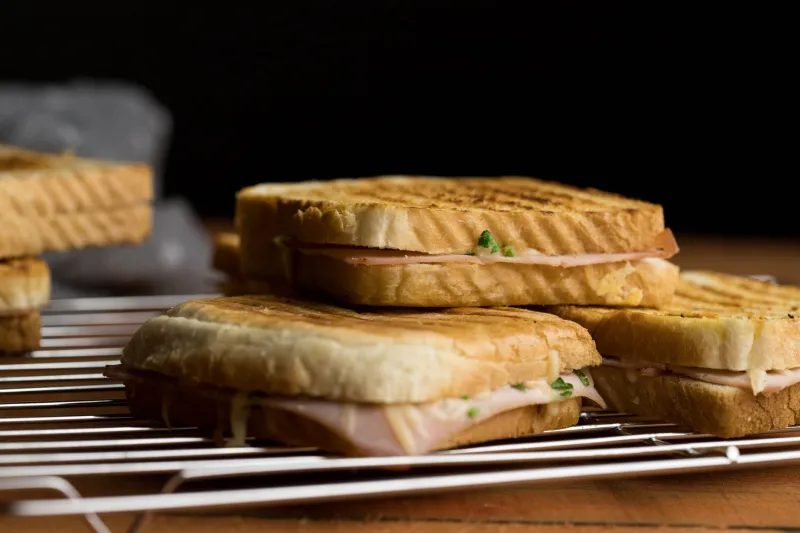
There's a moment on a Thursday evening, somewhere between the second glass and the last train, when someone leans over and asks whether the toastie press is still on. It usually is. And it usually produces something that deserves considerably more than a token splash of whatever happens to be open behind the bar.
The cheese toastie has a reputation problem. It gets filed under snack, hangover, kids' menu, something to soak up the Pinot. But a properly made toastie — good bread, decent cheese, something sharp or sweet to push against the fat — is one of the more interesting things you can put in front of a glass of wine. It has salt, it has fat, it has acid if the chutney is doing its job, and it has the browned, faintly bitter edges of grilled bread. That's four or five pairing levers before you've even thought about the filling.
So here is the case for taking it seriously, without taking it too seriously.
First, the principles (there are only three)
Fat needs acid. Salt needs fruit or sweetness. Browned bread loves bubbles, or a whisper of sugar. That's it. Everything else is detail.
The bigger mistake is overthinking. A toastie costs a few pounds to make at home and rather more at the bar; it does not need a sommelier's monologue. It needs a glass that has been chosen on purpose. There is a difference, and you can taste it.
Sharp cheddar and chutney: a dry Chenin
Start with the classic. A mature West Country cheddar — three years old, crumbly, the sort that makes your jaw ache pleasantly — grated rather than sliced, with a thin scrape of something chutney-ish. Not a ladle. A scrape. The chutney should be a rumour, not the main event.
The wine: a dry Chenin Blanc. A Vouvray sec or a Savennières from the Loire if you're feeling French, or a Swartland Chenin from South Africa if you want more weight for the money. Either way you're after waxy apple, a bit of quince, a honeyed edge and an acidity that arrives like a cold wind through a gap in the door.
Why it works: mature cheddar is salty and savoury and slightly gritty; the chutney brings vinegar and sugar; the Chenin has enough acidity to cut through both and enough texture not to vanish. If the only bottle you can find is off-dry, all the better — that touch of sugar meets the chutney and nobody loses.
Blue cheese and pear: a ten-year tawny
The blue cheese toastie is the one that converts people. Something like Cropwell Bishop or Cashel Blue, crumbled, with pear sliced thin enough to read the label through. A few walnuts if they're in the cupboard. A drop of honey if the pear is underripe and unrepentant about it.
The wine: a ten-year-old tawny Port. Not vintage Port, not a Ruby, not the dusty bottle at the back of a relative's cupboard. A tawny, chilled lightly — fifteen minutes in the fridge, no more — all walnut and dried fig and orange peel. It's sweet, but not cloying; the acidity keeps it moving.
Why it works: salt and funk against sweetness and nuts is one of the oldest tricks in the book, and it still works. The pear adds a clean, watery freshness that stops the whole thing collapsing into a cheese board between two slices.
If Port feels like a commitment, a demi-sec Vouvray does a similar job with less alcohol and more charm.
Ham and gruyère: an Amontillado, or Champagne
The ham and gruyère is the toastie that thinks it's a croque monsieur. Good cooked ham — carved off a joint, not the wafered stuff in a packet — with grated gruyère, a smear of Dijon, and, if you're being fancy, a spoon of béchamel under the cheese.
The wine: an Amontillado sherry. Nutty, saline, amber, bone dry, with a savoury tang that loves cured pork. Serve it in a small wine glass, not a thimble, and don't apologise for it.
If you're marking an occasion — a birthday, a promotion, a Tuesday that has been particularly Tuesday — a blanc de blancs Champagne is the other answer. Bubbles and fried bread is an underrated combination; the acidity scrubs the butter off your tongue and the bead makes everything feel like something.
Build the thing properly
A few practical notes, because the wine can only do so much.
Use a decent loaf — a sourdough with some chew, or a good white tin loaf if you want the soft, nostalgic version. Butter the outside of the bread, not the inside; it browns better than oil and tastes of butter, which is the point of butter. Grate the cheese. It melts faster and more evenly than sliced, and you get a better ratio at the edges where it matters.
Cook it low and slow. A toastie press is fine, but a heavy frying pan with a second pan on top as a weight gives you more control. Medium-low heat, four or five minutes a side, until the bread is deep gold and the cheese is pooling at the crust. Rest it for a minute before cutting, or the cheese will leave the building without you.
Cut it on the diagonal. There is no argument here.
Don't overthink the wine
Three things, and then we'll leave you alone.
Don't serve a big tannic red. A young Cabernet or a hefty Syrah will taste bitter and faintly metallic against melted cheese; the fat and the tannin fight and everybody loses.
Don't over-chill the white. A Chenin straight from the fridge tastes of almost nothing. Ten minutes out of the fridge is usually about right, and a tawny is better for a short spell in it.
Don't reach for the cheapest bottle in the rack just because the food is humble. A twelve to eighteen pound bottle chosen on purpose will do more for a toastie than a forty pound bottle chosen at random. That's the whole argument, really.
The toastie is a decent test of a wine bar. If the list can look after its cheapest, humblest dish with the same care as the Sunday roast, you're in good hands. Ours is on the board most evenings, next to the chalked-up glasses that go with it. Come and sit by the fire and see whether you agree.