The Corner Seat Nobody Reserved: On Solo Drinking, Dogs and the Art of Company

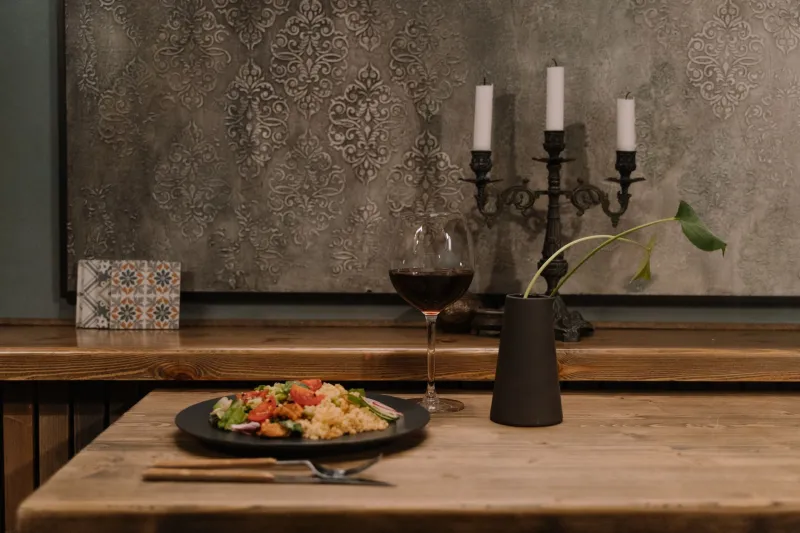
Photo: cosy village wine bar corner table with solo reader and dog by window, via i.pinimg.com
There is a table by the window that has no brass plaque and no reserved sign. It is not the best table in the bar — that is the one near the fire — and it is not the biggest. But it is the table people mean when they say ‘the usual’. The regulars’ table, though nobody calls it that out loud, is less a piece of furniture than a piece of village weather.
On a Tuesday it might hold a man with a crossword and a small glass of something white. On a Thursday it might be two dog walkers with muddy boots and a terrier asleep under the bench. On a Friday it might be full of people who all claim they are not regulars. The point is not who sits there. The point is that the table can hold both company and solitude without making a fuss about either.
The table that isn’t a club
The phrase ‘regulars’ table’ can sound like a threat: a closed circle, a private joke, a seat you have to earn. In a good village bar it is the opposite. A regulars’ table works best when it is slightly porous — when the person who has been coming for years and the person who has just moved into the village can both sit near it without feeling they have walked into a meeting.
The regulars are not a committee. They are the people who make the room feel inhabited. Their presence tells a newcomer that this is a place where people stay for a second glass, where the staff know how someone takes their coffee, where a dog can have a bowl of water without a performance. That is not cliquishness. It is atmosphere, and atmosphere is hard to fake.
Why solo drinking belongs in a village bar
Drinking alone at home is one thing. Drinking alone in company is another. The distinction matters. A bar gives a solo drinker a room with a bit of life in it — the clink of glasses, the low hum of other people’s conversations, the possibility of a nod if you want one and the freedom not to if you do not.
We have a woman who comes in early on Wednesdays with a paperback and orders a glass of Chenin. She is not waiting for anyone. She is not sad. She is reading in a warm place with a decent glass of wine, and the bar is better for her being there. There is a retired teacher who does the cryptic crossword and will discuss a wine’s acidity if you ask him, but will not be drawn on the clue he is stuck on. There is a dog walker who comes in at half four with a Labrador that believes the corner seat belongs to him. None of them are lonely in the way people fear. They are choosing company on their own terms.
A good host learns to read the difference between ‘I want to be looked after’ and ‘I want to be left alone’. Both are welcome. Both require attention, just different kinds.
The host’s balancing act
A village wine bar has to do something a city bar can sometimes avoid: it has to know people without making them feel watched. That is a fine line. Welcome is not the same as interrogation. A solo drinker does not necessarily want a conversation about their day; they may want a glass of something good and the sense that the room is holding them.
So the host offers rather than imposes. Water without being asked. A newspaper if there is one. A dog bowl. A seat near the bar if the person seems chatty, a seat by the window if they have a book. And a quiet word if another customer is being too friendly — because a bar can be too welcoming, just as a party can be too loud. The best hospitality gives people an exit as well as an entrance.
How to join without turning it into a clique
If you are new to the table, ask before you sit. ‘Is this anyone’s?’ is a better question than ‘Mind if I join?’ because it gives the table a chance to say yes or no without having to reject you personally. Read the room. A book, headphones or a laptop usually means quiet. A dog with its chin on the table usually means the opposite.
Bring a question rather than a monologue. ‘What’s open by the glass?’ is a good start. ‘What do you make of this Chenin?’ is better. Buy your drink before you settle, and do not colonise four seats with your coat and bag. If you are the regular, make room. The person who protects the table is the person who lets it change.
And if someone joins who does not know the ropes, include them without making them perform. A brief nod, a shared remark about the weather, a recommendation from the list — that is enough. The regulars’ table should feel like a place you can be alone together. That is a rare thing, and it is worth protecting.
The corner seat nobody reserved is one of the village’s small commons. Long may it stay half-empty, and long may it stay open.