The Chalkboard Has Ears: Building a Village Wine List From Requests
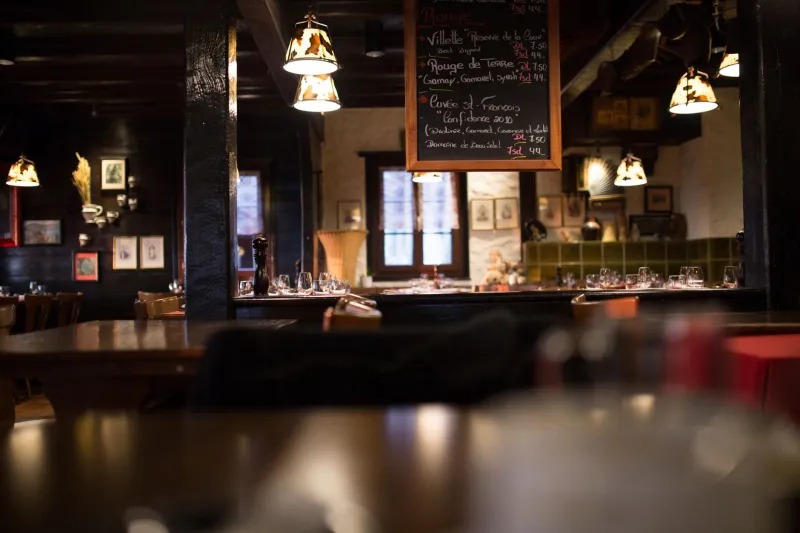
There is a certain kind of wine list that makes a village bar feel like a city restaurant with the lights turned down. It is beautiful, it is handwritten, and it is completely deaf. You can stand at the bar and ask for something dry, not too sharp, good with a roast, and the person behind the counter will point at a bottle described as 'volcanic, tense, and faintly austere'. That may be a lovely wine. It is not an answer.
A good village list is different. It is a conversation, not a decree. It starts with the requests that come over the bar on a wet Tuesday and builds upwards from there. The chalkboard has ears, or it should.
What People Actually Ask For
The requests are rarely technical. They are briefs. 'Something dry but not sharp.' 'A red that does not fight the telly.' 'What goes with shepherd's pie?' 'The one Janet had at her birthday.' 'Not too fizzy, not too sweet, under twenty quid.' If you listen for a month, patterns appear. The same words come back: dry, soft, smooth, not heavy, a bit different, not too expensive.
That is not a failure of wine education. It is a useful language. Our job behind the bar is to translate it into bottles, not to correct it. If someone wants a dry white for Sunday lunch, they do not need a lecture on malolactic fermentation. They need a wine with freshness, a bit of texture and a clean finish. If someone wants a soft red for a dark Tuesday, they do not need a lesson on tannin. They need something juicy, low in grip and easy to drink without thinking too hard.
The Sunday White and the Tuesday Red
The Sunday white is usually a dry, versatile thing. It has to get on with roast chicken, a bit of fish, a vegetarian pie or a plate of cheese. It should not be so aromatic that it takes over the table, and it should not be so oaky that it tastes like a furniture shop. A Picpoul, a dry Chenin, a clean unoaked Chardonnay or a brisk English white can all do the job. On the board, the note should be plain: 'Dry white — lemon, wet stone, clean finish. Sunday roast, fish, or a long chat.'
The Tuesday red is the comfort bottle. Dark evenings, low lighting, maybe sausages and mash, maybe just a bowl of something warm. It wants soft fruit, low tannin and a bit of freshness so it does not feel like a duvet. Beaujolais-Villages, a juicy Cinsault, a lighter Grenache or a soft Blaufränkisch can all fit. The note: 'Soft red — red fruit, low grip, no oak. Tuesday, sausages, or a film.' That is not dumbing down. It is being clear.
The Neighbour's Slot
Every village has a person who recommends wine. Often more than one. They buttonhole you by the postbox, they bring a bottle to a dinner, they say 'you must try this' with the intensity of someone sharing a secret. A good bar should have a slot for them.
Call it the neighbour's choice, the local tip, the bottle someone keeps pressing into your hand. It does not have to be fashionable. It does have to be genuine. If three different people mention the same bottle in a fortnight, that is a signal. Put it on by the glass. Write a short note in the language people used: 'Janet's red — soft, plummy, very easy. She was right.' It is not a wine award, but it is a better brief than most shelf-talkers. It also makes the list feel owned by the village rather than handed down to it.
Write the Board in Plain English
The best shorthand tasting notes are the ones that help someone decide. Not 'notes of pencil shavings and existential dread'. More like: 'crisp, salty, lemon'; 'soft, plummy, low grip'; 'savoury, peppery, chill it'; 'white flowers, green apple, good with fish'. Add a food cue. Add a price. Add whether it is light, medium or full. That is usually enough.
A board should let a person order without asking a question, or ask a better one. If every line needs a translator, the list is doing the wrong job. Keep the by-the-glass selection small and rotating: three whites, three reds and one odd bottle that makes people curious. Offer a 125ml splash so trying something new is a small decision rather than a commitment. The point is not to show how many countries you can fit on a board. The point is to make the next glass easy.
Rotate, Don't Restock the Same Six
A village list should have staples. People come back for the house white, the soft red, the reliable bottle with the roast. But a list that never changes is not a conversation; it is a recording. Rotate one or two by-the-glass lines every week or fortnight. Keep the house pour steady and let the edges move. Bring in something new when a customer asks for it, when a neighbour recommends it, when the season changes.
Not every request can go on the board. A village bar cannot stock every bottle that gets mentioned, and it should not try. But it can show that it has been listening. It can write the list in the language people actually use. It can leave a space for the neighbour's tip. It can make trying something new feel like a normal part of a Tuesday rather than a test.
The chalkboard is not a monument. It is a conversation with chalk on it. The best village lists are the ones where you can hear the room in the writing.