The Two-Bottle Peace Treaty: Ordering Wine for a Table of Strong Opinions

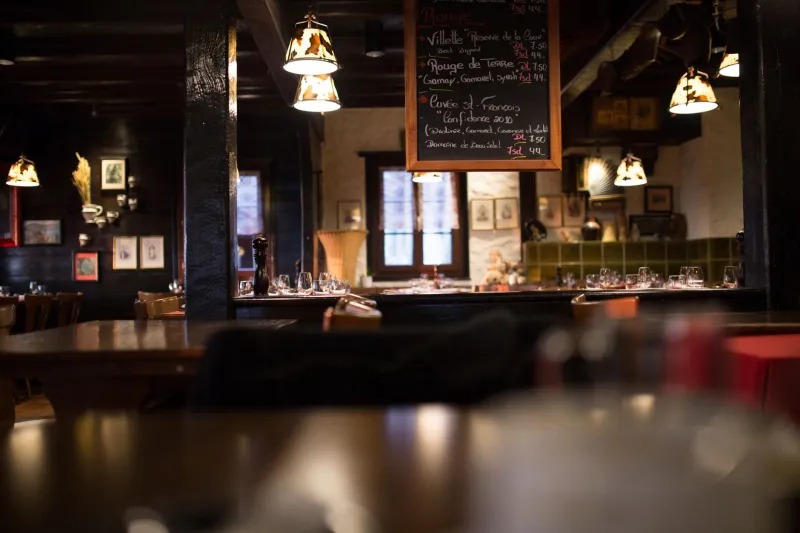
Photo: Dallas Krentzel, CC BY 2.0, via Wikimedia Commons
There is a particular moment in a village wine bar when the menus go down, the chalkboard goes up, and six people who normally agree on everything discover they have wildly different feelings about wine. One wants 'dry white'. Another wants 'something not too wine-y'. A third announces, with the confidence of a person who once did a tasting in a tent, that they 'don't really do red'. The fourth is happy with anything, which is helpful until they quietly send back the anything. The fifth wants natural. The sixth just wants to know if there are crisps.
At this point, the temptation is to run a referendum. Please don't. Ordering wine for a group is not a policy decision; it is an act of hospitality. The table does not need a consensus. It needs a glass, a bit of food, and someone willing to make a sensible call and then let everyone get on with the far more important business of talking over each other.
The table is not a tasting panel
A wine bar is not an exam. Most people are not looking for the perfect bottle. They are looking for permission to stop thinking about it. That is why the most useful role you can play as host is not sommelier but diplomat with a corkscrew.
The aim is simple: put two decent, flexible bottles on the table, make sure there is water, and let people help themselves. If the first glass is not quite their thing, they can try the other. If neither is their thing, they can have a beer, a soft drink or a glass of something else. No one has to be wrong. No one has to be right. The evening carries on.
The two-bottle peace treaty
My default for a mixed table of four to six is two bottles at once: one crisp, dry white and one soft, juicy red. Not the strangest things on the list. Not the cheapest thing in the fridge either. Just two bottles that can quietly do a job.
For the white, think Muscadet, Picpoul de Pinet, an unoaked Sauvignon, or a dry Riesling if the bar has one open. You want freshness and a bit of texture, not a wall of oak or a pudding-level sweetness. For the red, look for Grenache-led Côtes du Rhône, Barbera, a light Beaujolais, or a soft Portuguese red. You want something with fruit and enough acidity to cope with food, but not so much tannin that it feels like a dare.
This is not a compromise. It is a shortlist. A dry white covers the 'dry white' friend, most fish dishes and anyone who wants something crisp. A soft red covers the roast, the pie, the cheese and the person who claims not to like red but has only ever been handed a mouthful of something enormous. Between them, they will handle most of the table.
If the group is bigger, or thirstier, ask for a carafe of the same thing rather than opening a third style. Keeping the choice narrow is the whole point.
Read the room, not the label
Before you pick, look at what people are eating. In November, that often means pies, stews, mushrooms, baked camembert and whatever is on the specials board. If most of the table is ordering slow-cooked things, lean red. If there is a lot of fish, shellfish or sharp dressings, lean white. If it is a proper mix of small plates, the two-bottle approach earns its keep.
Also read the mood. A cold, damp Tuesday after work is not the moment for a tannic monster. A long Saturday lunch with friends who have nowhere else to be can carry something a bit more serious. The village bar should feel relaxed, but relaxed is not the same as careless. A little attention goes a long way.
And if someone says they want 'something not too wine-y', do not panic. That is usually code for 'not oaky, not heavy, not too dry, not too sweet, and please don't make me discuss it'. A dry rosé, a light red served slightly chilled, or a fresh white with a bit of fruit will often do the trick. You do not need to find the one bottle that answers a riddle. You need to find a glass they will actually enjoy.
Food is the diplomat
When the table is divided, food is the thing that quietly brings everyone back together. A crisp white with salt and acidity is forgiving. A soft red with fat and umami is forgiving. That is why the two-bottle treaty works so well with a shared plate of something warm and generous.
If you are ordering for the table, ask the kitchen what is doing the heavy lifting that day. A good village wine bar will have a house pour that is meant for exactly this: a white that is not too precious and a red that does not need a speech. You are not looking for a showstopper. You are looking for a bottle that makes the food taste better and the conversation flow.
Phrases that settle the table
The right words matter more than the right grape. Try these:
- 'I'm going to start us with a white and a red for the middle; shout if you'd rather have something different.'
- 'Does anyone actively hate [style]?' This is a veto, not a preference round. It moves much faster.
- 'We'll keep both open and see where we land.'
- 'Let's get the first glass down before we solve the second bottle.'
- 'The white is crisp and dry; the red is soft and juicy. If you want something in between, I'll ask for a rosé.'
Avoid 'What does everyone fancy?' It invites six answers, two of which are not really answers, and one of which is a story about a holiday in Portugal. Avoid 'red or white?' as a whole-table question. And avoid apologising for your choice before anyone has tasted it. Confidence is not the same as expertise. It is just good hosting.
The price question
Sort the budget quietly, ideally before anyone has opened the list. 'I'm aiming around this much a bottle; tell me if that's off' is a perfectly decent sentence. So is 'let's do house bottles and one step up'. What you do not want is a spreadsheet discussion while the waiter stands there.
In a village bar, the house wine is often the smartest order on the list. It is there because people drink it, not because it is a punishment. If the group is splitting the bill, choose something mid-range and unshowy. If one person is treating the table, let them choose without a group audit. Hospitality includes not making a fuss about money at the wrong moment.
When to ignore the committee
There are times when the group's opinions should not be treated as a vote. If someone is pregnant, driving, not drinking, allergic to something or simply does not want alcohol, that is not a preference to be balanced against everyone else's. It is a fact. Make sure there is something good in their glass too, whether that is a proper soft drink, a low-alcohol option or a decent alcohol-free beer.
For everyone else, remember that a loud opinion is not the same as a firm one. The person who says 'I only drink dry white' may well end up having a glass of your soft red with the pie. The person who says 'not too wine-y' may surprise themselves. Give them the chance.
The last glass rule
As we head towards the festive season, with tables getting longer and bookings getting earlier, the two-bottle peace treaty is worth keeping in your back pocket. It is not about getting wine exactly right. It is about getting the evening moving.
If the bottles are not loved, no one has to declare it. You adjust next time. If one disappears faster than the other, that is useful information. If someone asks for something different, that is not a failure of your choice; it is the bar doing its job.
The best village wine bar tables are not the ones where everyone agrees on the wine. They are the ones where no one has to. Order the white, order the red, pass the plates and let the conversation do the rest.